
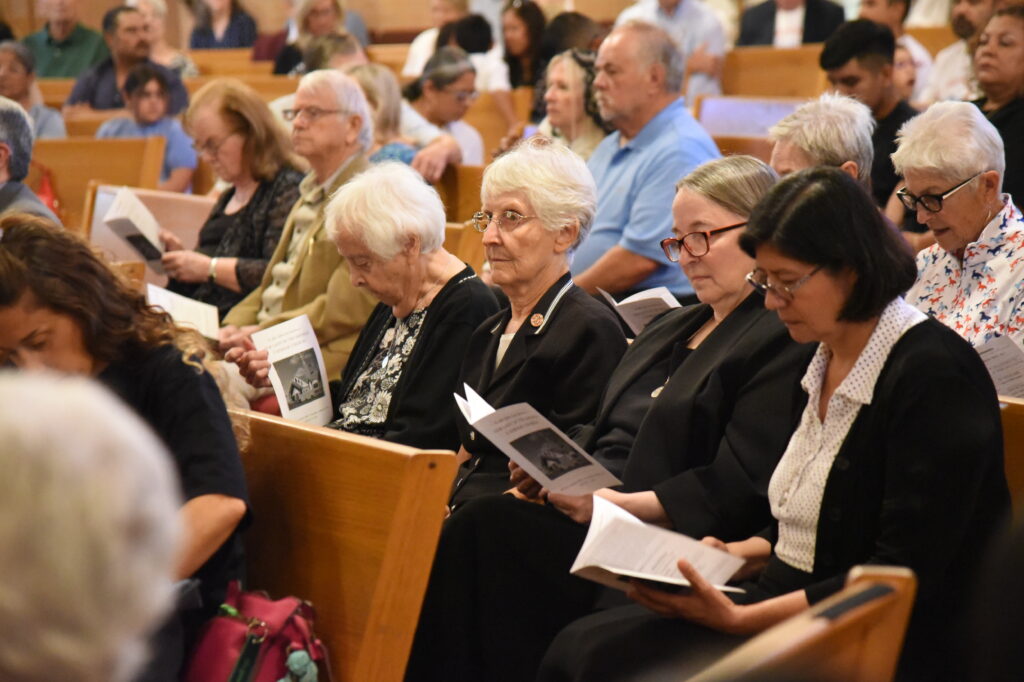
A person can know where to sit, when to kneel and which parking-lot exit moves fastest after Mass without ever feeling that the parish would notice if they disappeared. They may be present every Sunday and still experience the community as something happening around them rather than something they are part of.
Belonging changes that relationship. It is the quiet conviction that there is a place for me here: people know my name, my gifts matter, my family is part of the story and my absence would be felt. It does not happen because a parish prints the word ‘welcome’ on a sign. It grows through repeated experiences that make welcome believable.
That desire is not peripheral to parish life. In the USCCB’s national synthesis of the Synod, one of the most common hopes expressed was for a more welcoming Church in which people could find accompaniment, be listened to and participate more fully. The report also connected clear, consistent communication with trust and collaboration.
People belong when they are noticed
Belonging often begins with something remarkably small: eye contact, a greeting or someone remembering a name. Springtide Research Institute describes a progression from being noticed, to being named, to being known. In its research among young people connected to faith communities, 72 percent said someone greets them at their place of worship, and 70 percent said people there remember their name.
Those gestures can sound too ordinary to be strategic. That is precisely why they matter. A parish can launch a new program in a week. It takes a culture to ensure that the new family, the older widower and the teenager standing alone are not treated as scenery.
Parish leaders cannot personally know everyone. But they can form greeters, ministry leaders, staff and longtime parishioners to notice people rather than merely process crowds.
People belong when they see a place for themselves
People look for evidence that someone like them has a real place in the community. That evidence may be a young adult leading a ministry, a family with a child who has a disability participating fully in parish life, or a profile of an older parishioner whose years of quiet service are finally visible.
This does not mean reducing people to categories or placing them in photographs simply to signal diversity. It means allowing the full parish to be seen: different ages, cultures, vocations, abilities, histories and stages of faith, united in Christ. When parish communications show only clergy, buildings and major events, many of the people who sustain the community remain invisible.
People belong when they are needed, not merely served
A parish can be very welcoming and still leave people in the role of spectators. Deeper belonging develops when someone is trusted with responsibility: bringing a meal, mentoring a teen, singing in the choir, organizing a drive, reading at Mass or contributing a skill the parish did not know it needed.
The invitation matters. A general notice saying ‘volunteers needed’ asks everyone and therefore often reaches no one. A personal invitation says, ‘We see something in you that could bless this community.’ People begin to take ownership when the parish stops speaking only about what it can offer them and begins naming what they can offer the parish.
People belong when they understand the parish’s story
Announcements explain parish activity, but they rarely explain parish identity. A newcomer may see a packed calendar without understanding what holds it together. Stories supply that meaning.
A story about a marriage restored through prayer, a student discovering a vocation or a business owner supporting a parish ministry shows what the parish believes in lived form. It turns an institution into a community of recognizable people. It also gives parishioners a shared memory: this is who we are, this is how God has been at work among us, and this is the life we are building together.
This is why parish storytelling is not decoration. It can help people locate themselves inside a larger story rather than remain consumers of parish services.
People belong when welcome continues beyond the first visit
Many parishes concentrate their welcome at the church door. But belonging is formed between Sundays too: when a family receives a thoughtful message after a baptism, when someone follows up after an illness, when a parishioner sees a neighbor’s story in the mailbox, or when the parish remembers an anniversary that matters.
Repeated contact communicates that the relationship is not limited to a transaction or a single event. A parish magazine can support this work by bringing parish life into the home, where spouses, children and less-active family members can encounter it together. It keeps the community visible even when someone cannot attend.
People belong when someone listens
Communication cannot flow in only one direction. People need ways to tell the parish what they have experienced, what they need, where they have been hurt and what they hope the community might become. Listening sessions, ministry conversations, interviews and ordinary time after Mass all create openings.
Listening does not require a parish to abandon its Catholic identity or promise that every request will become policy. Clarity and warmth are not opposites. People can be accompanied honestly when they know they will be treated as persons rather than problems to manage.
Communication cannot manufacture belonging – but it can make it visible
A beautiful publication cannot substitute for relationships. It cannot compensate for a cold welcome, an unanswered message or a culture in which only the same few voices are heard.
But good communication can reveal the relationships that already exist, invite more people into them and remind the parish that holiness is unfolding in ordinary lives all around it. It can say, month after month: these people are not an audience. They are the Church. You are part of this story too.
DECM helps parishes tell the local stories that strengthen community and reach beyond the church walls. Learn more about creating a customized parish magazine.