
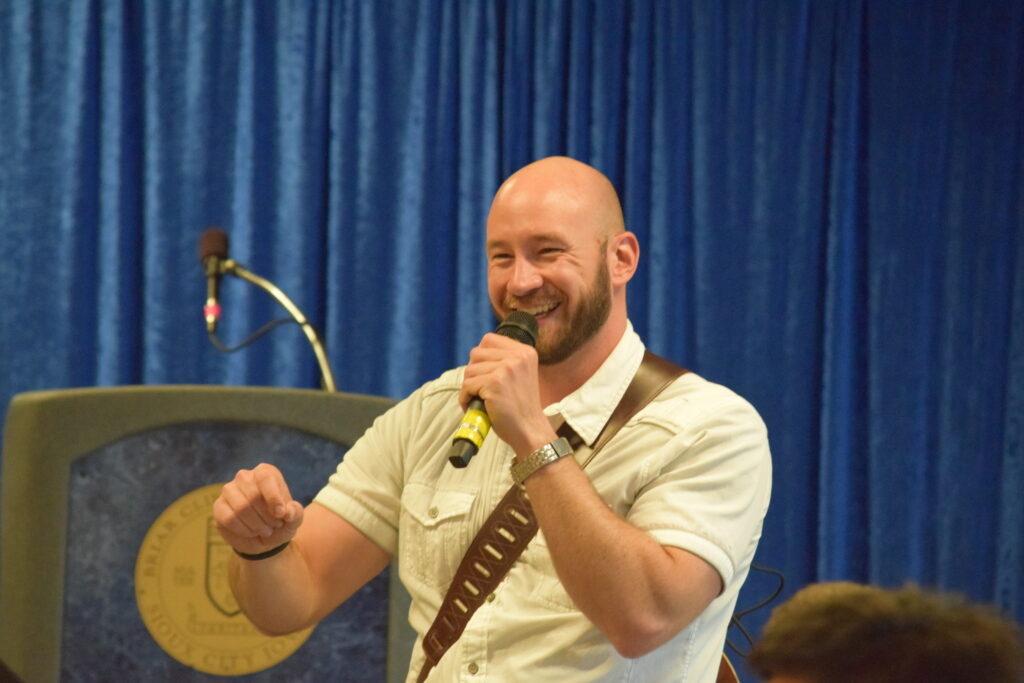
Jon Konz spent much of his early life trying to be what he calls a “good enough Catholic.”
Today, he is a husband, father and founder of Catholic Ministry Professionals, where he helps priests and parish leaders step out of burnout, reclaim time for prayer and build more fruitful ministries.
We spoke with Jon about his gradual conversion, the confession that changed his prayer life, and why Jon and Catholic Ministry Professionals can help struggling clergy and parish workers.
What was faith like in your family growing up?
Faith was always part of our lives – I grew up on a farm outside a small town in southwest Minnesota. My mom was very outspoken about her faith, while my dad lived it more quietly. Going to Mass was never a question.
I was a “good enough Catholic.”
What did being a “good enough Catholic” mean to you?
I wanted to believe, go to Mass and generally be a good person, but I did not want my faith to ask too much of me.
People would sometimes tell me that I would make a good priest, and that terrified me. I thought that if I took my faith too seriously, God might call me to something I did not want.
I was trying to remain good enough to get into heaven, but not so committed that I would have to make difficult decisions or surrender my own plans.
When did that begin to change?
One important moment came in college.
I was studying different subjects and could not find anything that really interested me. Then I took an Old Testament course and loved it. I remember telling my mom that I was considering studying theology.
As soon as I said it, it felt as though a weight had fallen from my shoulders. My mom looked at me and said, “Jon, I’ve been waiting my whole life to hear you say that.”
It felt like a deep confirmation that I was moving in the right direction.
Did studying theology immediately transform your faith?
Not immediately.
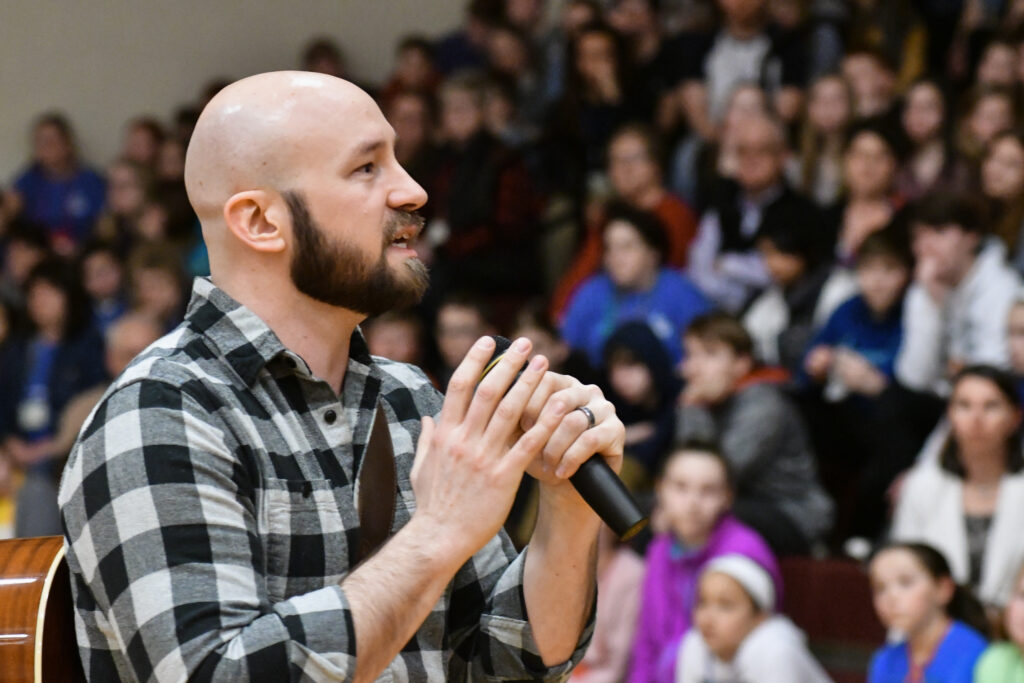
After college, I became a campus minister at a Catholic high school. Every day, I encouraged students to trust Jesus and allow their faith to shape their decisions.
That forced me to examine whether I was willing to do the same.
I had spent years learning about God, but ministry made me confront the difference between understanding Christianity intellectually and actually living as though Jesus were real.
If Jesus is truly a living person—and not simply an idea, tradition or subject to study—then that changes how you relate to Him. It changes how you make decisions, form relationships and live every day.
What did you begin to recognize about your own life?
I became painfully aware of the gap between the person my students believed I was and the person I was outside of ministry.
They saw someone who was pursuing Christ and encouraging them to do the same. But I knew there were still parts of my life that I had not surrendered to God.
I hated that gap. I had to confront it every day.
At the root of it, I was holding myself back because I did not trust that God’s plan was better than my plan.
Was there a single moment when you finally surrendered?
It was more gradual than dramatic.
My friendships changed. A relationship I was in ended. I was trying to remove habits and attachments that no longer fit the life God was calling me to live.
Eventually, I went into the chapel and prayed, “Lord, this is all Your fault. But I don’t know what else to do, so we’ll try it Your way.”
It was not a polished prayer, but it was honest. That became a real turning point.
What helped that conversion take root in your daily life?
A confession changed the way I prayed.
The priest gave me an unusual penance. He asked me to spend 15 minutes every day for one week praying with Psalm 51 in the presence of the Blessed Sacrament.
Normally, you might receive a few prayers as a penance, so a week-long assignment felt a little unfair at first. But I worked at a school with a chapel, so I knew I could do it.
On the first day, I noticed something different. There was a deep peace inside me that had not been there before.
I completed the week, but I never stopped the practice.
How did praying with Scripture change you?
It was more than simply reading the Bible or learning information.
I would sit with a passage, think about it, wrestle with it and allow God to speak through it. Scripture became a place where I could encounter Him personally.
On day one, I could feel the difference internally. About a year later, other people started asking me what had changed.
That taught me that conversion is not only about making one major decision. You also have to build habits that allow God to continue transforming you.
How did those experiences lead to Catholic Ministry Professionals?
After working in Catholic schools and parishes, I began noticing how discouraged many ministry leaders had become.
They were working incredibly hard, planning events and giving almost all of their time to the Church. Yet many were not seeing the fruit they hoped for.
Young people might be active in a youth group and then stop practicing the faith in college. Priests could have every hour of the day filled with meetings, sick calls, parish responsibilities and administration, yet still feel as though nothing was changing.
The frustration was not usually caused by a lack of effort. These were good people who cared deeply. They were simply overwhelmed.
What do you think goes wrong in ministry?
We have taken St. Paul’s call to become “all things to all people” and turned it into believing we must do everything for everyone.
That is a recipe for burnout.
Jesus tells us in John 15 to abide in Him because, apart from Him, we can do nothing. Fruitful ministry has to begin with intimacy with Christ.
When priests and ministry leaders are so busy that they barely have time to pray, prepare or form meaningful relationships, they may be doing good things without creating the conditions for deep discipleship.
How does Catholic Ministry Professionals help?
Catholic Ministry Professionals help priests and parish leaders identify what truly requires their time and attention.
For example, I worked with a pastor responsible for 11 parishes and a Catholic school. He told me he had only experienced a few free evenings during the previous month.
We reviewed his meetings using a simple set of questions: Was he canonically required to attend? Did his presence change the outcome? Could the information simply be communicated another way?
Within one month, he reclaimed approximately 15 hours.
That gave him more time to pray, prepare his homilies and be genuinely present to his people. His staff and parishioners began noticing the difference.
Why does creating that space matter so much?
Because ministry is not primarily about appearing at every event or completing every task.
Real discipleship requires depth, trust and heart-to-heart relationships. A priest cannot form those relationships if he is constantly rushing from one token appearance to another.
When leaders reclaim time for prayer and personal formation, the Holy Spirit can work through them in a different way. Ministry becomes life-giving rather than something that continually drains them.
What would you say to a priest or parish leader who feels completely stuck?
You do not have to change everything.
Many people become overwhelmed because they believe they must fix every program, meeting, staffing problem and parish system at once.
You do not need to know every answer. You simply need one clear next step.
Maybe that means cutting one unnecessary meeting. Maybe it means protecting one hour for prayer. Maybe it means investing deeply in three people rather than trying to be everywhere for everyone.
Why is that idea of one next step so important?
It reflects the way God often works in our own lives.
When Peter stepped out of the boat, Jesus did not give him water-walking lessons. Peter was simply invited to take the next step.
The same is true in our spiritual lives and in our parishes. Transformation rarely happens all at once.
It begins when we stop settling for “good enough” by trusting that God’s plan is better than our own and taking the next faithful step.
Thank you to Jon Konz, and look out for his feature in our upcoming parish magazines! And before you go, check out Catholic Ministry Professional’s podcast here.